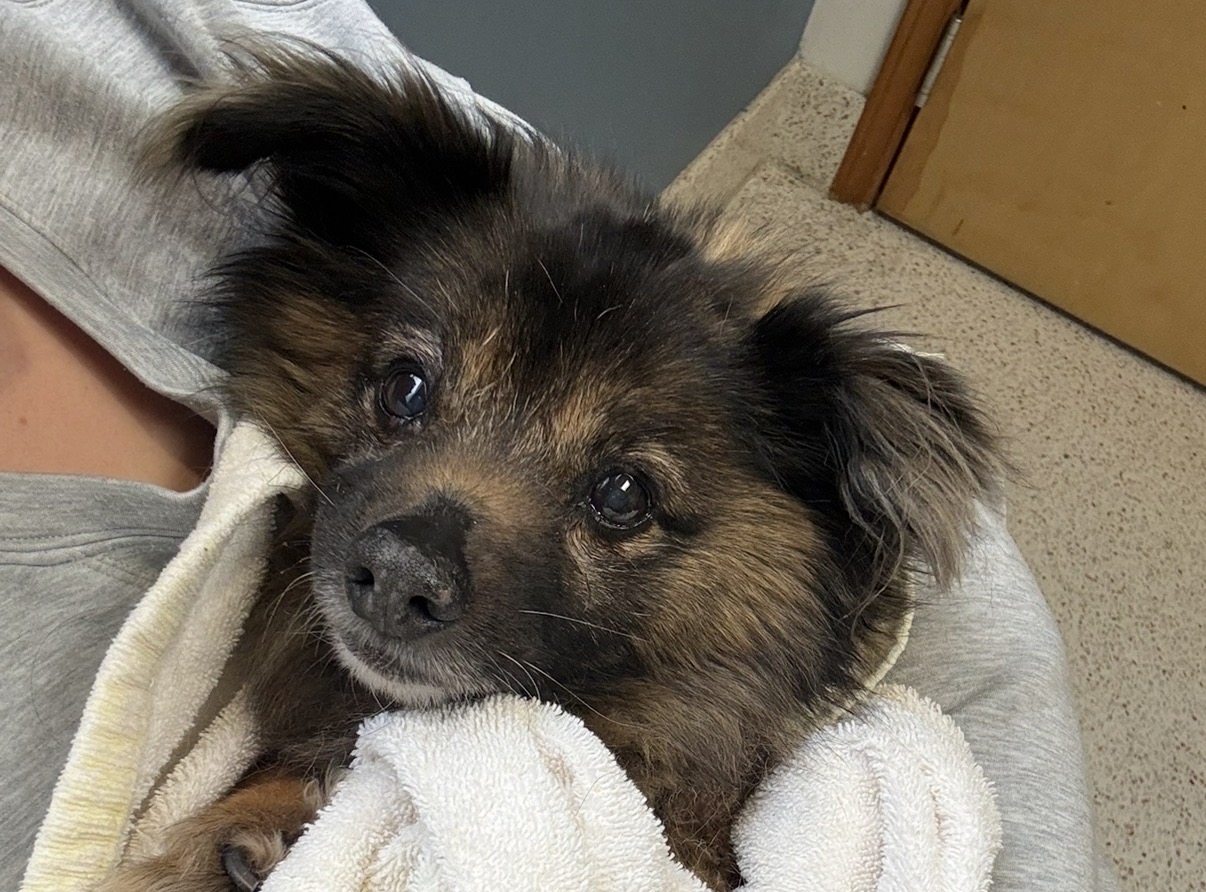
More Than Just a Doggio
A few week ago, we (my mom and I) had to say goodbye to our beloved dog, Henry.
He was 17 years old.
I always catch myself wanting to call him my childhood dog, but that's not quite true. I didn't grow up with a dog unfortunately even though I had asked for one about ten million times. Henry came into my life when I was 18, making him my early adulthood family dog. Looking back, it's hard to remember so many milestones of my adult life without also remembering him somewhere in the background.
He was the best version of a San Antonio special.
Not a fancy breed, in fact we never really knew what breed he was.
Just a dog who somehow managed to always be exactly where you were trying to walk, believed every meal should be shared, and greeted you with the same excitement whether you had been gone five minutes or five days.
As he got older, we watched the changes happen little by little.
Then, somehow, all at once.
He no longer knew who we were.
Eating became difficult.
Walking became harder.
He was restless.
Even going to the bathroom became confusing.
We knew it was time to let him go.
That decision broke our hearts.
But it also reminded me of something I see every day as a therapist.
We often underestimate how deeply animals shape our emotional lives.
We tend to describe them as "just pets," but they become so much more than that.
They become part of our routines.
They become our quiet companions.
They witness our lives without asking us to explain ourselves.
They see us celebrate new jobs, marriages, babies, graduations, and birthdays.
They also sit with us through breakups, miscarriages, illnesses, anxiety, depression, grief, loneliness, and days when getting out of bed feels impossible.
They never ask us to have it all together.
They simply stay.
As therapists, we often talk about the importance of having a safe relationship—a place where you can be accepted without judgment.
For many people, their first experience of unconditional acceptance wasn't another person.
It was a dog.
Or a cat.
Or another beloved animal.
They don't care what your body looks like.
They don't care how productive you've been.
They don't care if you cried today, canceled plans, or wore the same sweatshirt three days in a row.
They're just happy you're home.
There's actually good science behind why animals have such a powerful impact on our mental health. Spending time with pets has been shown to reduce stress hormones like cortisol, increase oxytocin—the hormone associated with connection and bonding—and encourage routines, movement, and emotional regulation.
But honestly, most pet owners don't need research to convince them.
We've lived it.
We've cried into their fur.
We've talked to them like they understood every word.
We've laughed at the ridiculous things they do.
We've found comfort simply because they chose to sit next to us.
They don't solve our problems.
But they have an incredible ability to make us feel less alone while we're carrying them.
That's why losing them hurts so deeply.
It's not "just losing a pet."
It's losing the one who greeted you every day.
The one who made your house feel like home.
The one who never cared if you were at your best or your worst.
The one who loved you through every version of yourself.
One of the hardest parts of saying goodbye to Henry was realizing we'd been grieving long before he died.
As he aged, there were little losses all along the way.
The slower walks.
The cloudy eyes.
The naps that lasted longer.
The moments he didn't seem to recognize us anymore.
Grief doesn't always begin with death.
Sometimes it begins the first time you realize time is changing someone you love.
If you've recently lost an animal, I hope you'll give yourself permission to grieve fully.
Not because they were "just a pet."
But because they were a relationship.
A source of comfort.
A constant presence.
A chapter of your life.
And those kinds of losses deserve to be mourned.
Henry gave our family 17 wonderful years.
In the end, the greatest gift we could give him was peace.
The greatest gift he gave us was showing us what uncomplicated love looks like.
Maybe that's one of the biggest lessons animals teach us.
They don't ask us to earn love.
They simply give it.
And if we're paying attention, they teach us how to give it right back.