Postpartum Mental Health: We Need to Know the Signs Before There Is a Crisis
With so much in the media right now surrounding postpartum psychosis and the case of Lindsay Clancy, I think it is important that we once again talk about perinatal mental health—not simply because it is in the news, but because these conversations need to be happening long before there is a tragedy.
We need to know what postpartum depression looks like.
We need to know what postpartum anxiety looks like.
We need to understand postpartum OCD.
And we absolutely need to know the warning signs of postpartum psychosis.
Not just as mental health professionals. As mothers, partners, friends, grandparents, siblings, pediatricians, OB-GYNs, and communities.
Because sometimes the person struggling recognizes that something is wrong.
And sometimes they don't.
We Have to Stop Treating Postpartum Mental Health as an Afterthought
There is still a tendency to talk about the postpartum period as though emotional distress is simply part of becoming a parent.
Of course you're exhausted.
Of course you're anxious—you have a new baby.
Everyone feels overwhelmed.
It's just hormones.
You'll feel better once the baby sleeps.
While adjustment, exhaustion, hormonal changes, and emotional ups and downs can certainly be part of the postpartum experience, there is a point at which symptoms are no longer something a parent should simply be expected to endure.
Postpartum depression, postpartum anxiety, postpartum OCD, and postpartum psychosis are real mental health conditions. They are not weaknesses. They are not failures to adjust to motherhood. And they are not something someone should be expected to "push through."
They deserve treatment.
You Cannot Always See When Someone Is Struggling
This is also incredibly important to remember: perinatal mental health conditions are not always visually obvious.
Someone can get out of bed every morning.
They can shower, get dressed, put on makeup, go to work, take care of their baby, answer text messages, show up for family events, and smile for pictures.
And they can still be deeply struggling.
We sometimes have an image in our minds of what depression, anxiety, or another mental health condition is supposed to "look like." But mental health is not a visual diagnosis.
Functioning does not necessarily mean someone is well.
Smiling does not mean someone isn't struggling.
Showing up does not mean everything is okay.
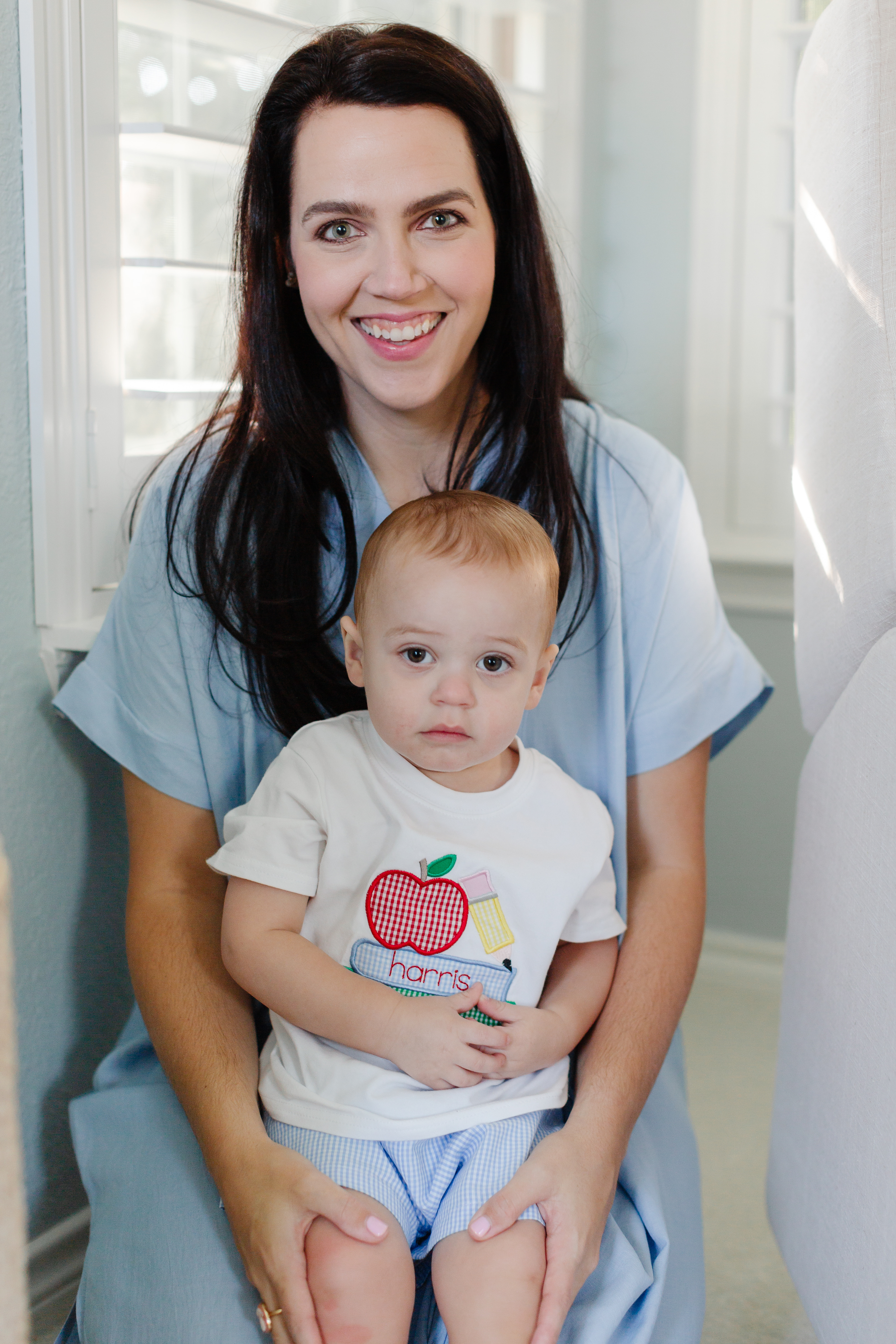
The photo I attached to this blog is of me and my son. It's a beautiful photo and one that I love. But I also know that this was a really difficult period of my life.
You wouldn't necessarily know that by looking at the picture.
And that is exactly the point.
A photograph captures a moment. It doesn't tell us what is happening inside someone's mind, what it took for them to get through that day, or what they may be experiencing when no one else is around.
Let it be a reminder that we cannot alwaysseewhen someone is struggling. We have to ask. We have to listen. And when someone tells us they aren't okay, we have to believe them.
Postpartum Depression Doesn't Always Look Like Sadness
When people hear "postpartum depression," they often imagine a mother crying constantly or saying that she feels depressed.
Sometimes it looks like that.
But it can also look like:
Feeling numb or disconnected
Irritability, anger, or rage
Feeling hopeless or worthless
Persistent guilt or feeling like a "bad mom"
Losing interest in things you normally enjoy
Feeling disconnected from your baby
Difficulty concentrating or making decisions
Changes in sleep or appetite beyond what would be expected with caring for a newborn
Feeling like your family would be better without you
Thoughts of death, suicide, or self-harm
A mother can love her baby deeply and still experience postpartum depression.
Those two things can exist at the same time.
Postpartum Anxiety Can Hide Behind "Being a Good Mom"
Postpartum anxiety can be particularly difficult to recognize because anxiety can disguise itself as being extra careful, prepared, or attentive.
It might look like:
Constantly worrying that something bad will happen to the baby
Repeatedly checking whether the baby is breathing
Being unable to sleep even when the baby is sleeping
Racing thoughts that you cannot turn off
Feeling constantly "on edge"
Needing repeated reassurance
Feeling unable to leave the baby with anyone else
Experiencing physical symptoms such as a racing heart, nausea, dizziness, or panic
Feeling an overwhelming need to control the baby's environment or routine
There is a difference between the normal worries that come with caring for a new baby and anxiety that begins interfering with your ability to sleep, function, connect, or feel safe.
You do not have to wait until it becomes unbearable to ask for help.
We Also Need to Talk About Postpartum OCD
Postpartum OCD is another condition that can be incredibly frightening, particularly because it can involve unwanted intrusive thoughts or images about something terrible happening to the baby.
These thoughts can feel horrifying to the person experiencing them.
A parent may think:
"What kind of mother thinks something like this?"
And because they are terrified someone will misunderstand what they are experiencing, they may tell no one.
This is one of the reasons education matters so much.
Intrusive thoughts in postpartum OCD are unwanted and distressing. The person is typically horrified by them and does not want to act on them. They may engage in checking, reassurance seeking, avoidance, or rituals in an attempt to make themselves feel safe.
Postpartum OCD and postpartum psychosis are not the same thing, and understanding that distinction is incredibly important.
Postpartum Psychosis Is a Medical Emergency
Postpartum psychosis is less common than postpartum depression and anxiety, but we need to be very careful about allowing the wordrareto become synonymous withsomething we don't need to worry about.
Postpartum Support International estimates that postpartum psychosis occurs in approximately1–2 out of every 1,000 deliveries.That means real women and real families are experiencing this illness every day.
Symptoms often begin suddenly, frequently within the first two weeks after delivery, although onset can occur later.
Warning signs can include:
Hallucinations—hearing or seeing things that aren't there
Delusions or beliefs that are not based in reality
Paranoia or extreme suspiciousness
Severe confusion or disorganized thinking
Rapid or extreme mood changes
Significant agitation
Unusually elevated energy or hyperactivity
Being unable to sleep or having a dramatically decreased need for sleep
Difficulty communicating clearly
Behaviors that seem dramatically out of character
Losing touch with reality
Postpartum psychosis isnot something to monitor at home and see if it gets better.
It is not something to white-knuckle through.
It is not something that can wait until next week's therapy appointment.
It is amedical emergency requiring immediate evaluation and treatment.
If you believe someone may be experiencing postpartum psychosis, do not leave the person or baby alone. Seek emergency medical care immediately.
And importantly, postpartum psychosis is treatable. Experiencing psychosis does not mean someone is destined to remain ill. With appropriate medical and psychiatric treatment, recovery is possible.
Sometimes Your Partner Will See It Before You Do
One of the most important things we can do during pregnancy is talk about postpartum mental healthbeforethe baby arrives.
Tell your partner what to watch for.
Tell your mom.
Tell your sister.
Tell your best friend.
Talk about what your normal personality and coping patterns look like so that the people closest to you can recognize when something has significantly changed.
We spend so much time preparing other people to help us with the baby:
"Here's how we warm the bottle."
"Here's where the diapers are."
"Here's the sleep schedule."
We should also be saying:
"Here's what I need you to watch for in me."
Because when someone is experiencing severe depression, anxiety, mania, or psychosis, they may not have the insight or capacity to recognize how much they are struggling.
Our support systems need education, too.
Why Don't People Ask for Help?
If treatment exists, why do so many parents continue struggling silently?
There isn't one answer.
Some don't realize what they're experiencing is a mental health condition.
Some assume everyone feels this way.
Some are told, "Welcome to motherhood."
Some are terrified someone will think they are a bad parent.
Some worry that being honest about intrusive thoughts will result in someone taking their baby away.
Some have previously tried to tell someone they were struggling and felt dismissed.
Some don't have access to a provider trained in perinatal mental health.
Some have become so accustomed to taking care of everyone else that they cannot imagine saying,I need someone to take care of me right now.
And some are simply scared.
This is why the responsibility cannot fall entirely on the struggling parent to identify their own symptoms, find the right provider, make the appointment, arrange childcare, explain what is happening, and advocate for themselves while they are already drowning.
We have to become better at checking on the person behind the baby.
"How Are You?" Isn't Always Enough
We have to ask better questions.
Instead of only asking:
"How are you doing?"
Try:
"Are you able to sleep when you have the opportunity?"
"Do you feel like yourself?"
"How anxious have you been feeling?"
"Are your thoughts ever scaring you?"
"Do you feel connected to the baby?"
"Are you having thoughts that feel intrusive or difficult to control?"
"Do you feel safe?"
"Do you ever feel like your family would be better off without you?"
And then—and this part matters—be prepared to hear the answer without immediately minimizing it or trying to make it sound better.
Sometimes support begins with believing someone when they tell you they are not okay.
You Do Not Have to Wait Until It Is "Bad Enough"
This may be the message I want parents to hear most:
You don't have to earn mental health treatment by becoming sick enough.
You don't need to wait until you can't function.
You don't need to wait until your relationship is suffering.
You don't need to wait until you're having thoughts of hurting yourself.
You don't need to wait until you're in crisis.
If something feels different, harder, scarier, or more consuming than you expected, you deserve to talk to someone who understands perinatal mental health.
Postpartum depression deserves treatment.
Postpartum anxiety deserves treatment.
Postpartum OCD deserves treatment.
And postpartum psychosis deserves immediate emergency medical treatment.
Let's Talk About It Before We Have To
When stories involving postpartum mental illness enter the national conversation, there is often an enormous amount of discussion after something devastating has happened.
I would rather we have these conversations before the crisis.
I want pregnant women to know the symptoms.
I want partners to know the symptoms.
I want grandparents and friends to know the symptoms.
I want mothers to know that saying"Something doesn't feel right"is enough of a reason to ask for help.
And I want us to stop treating suffering as an expected requirement of motherhood.
You can be grateful for your baby and struggling.
You can love being a mother and have postpartum depression.
You can desperately want your baby and experience postpartum anxiety or OCD.
You can be a loving parent and develop postpartum psychosis.
Mental illness is not a measure of how much someone loves their child.
Keep Talking About It
The goal of talking about postpartum mental health isn't to scare mothers or families. It's to make sure we know what we're looking for—and what to do when we see it.
We need to keep talking about postpartum depression, anxiety, OCD, and psychosis when theyaren'tmaking headlines. We need to check on the people we love, even when they look like they're doing just fine. We need to listen when someone tells us they're struggling instead of reminding them of all the reasons they "should" be okay.
Most importantly, we need parents to know that struggling does not make you a bad parent, and asking for help is not something you need to wait to do until you're in crisis.
Know the signs. Check on each other. Believe people when they say they're struggling. And remember: you cannot always see mental illness from the outside.
A Note About Postpartum Psychosis
Postpartum psychosis is a medical emergency. If you believe you or someone you love may be experiencing hallucinations, delusions, paranoia, severe confusion, mania, significant behavioral changes, or a loss of contact with reality, seek emergency medical care immediately. Do not leave the individual or baby alone while arranging emergency care.
For non-emergency perinatal mental health concerns, working with a clinician specifically trained in perinatal mental health can help you determine the appropriate level of support and treatment.
